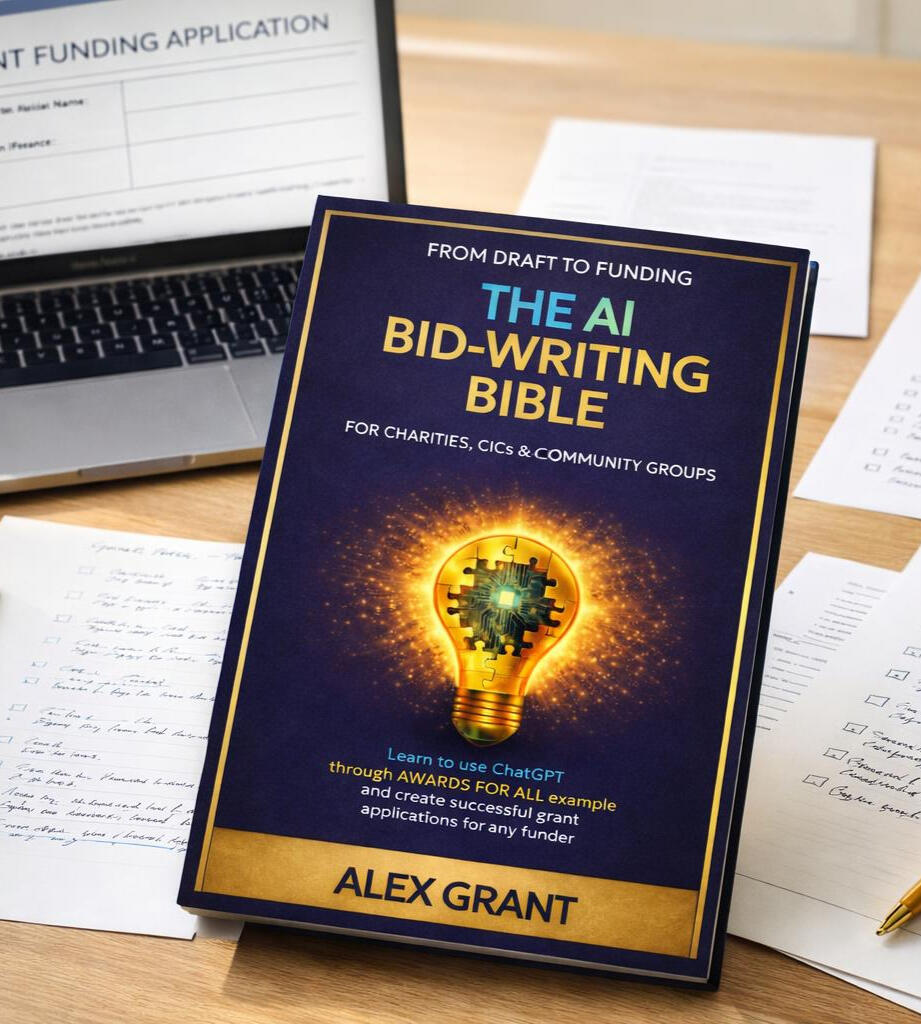
From Draft to Funding
A guide for charities, CICs and community groups who want to win grants without losing their voice.
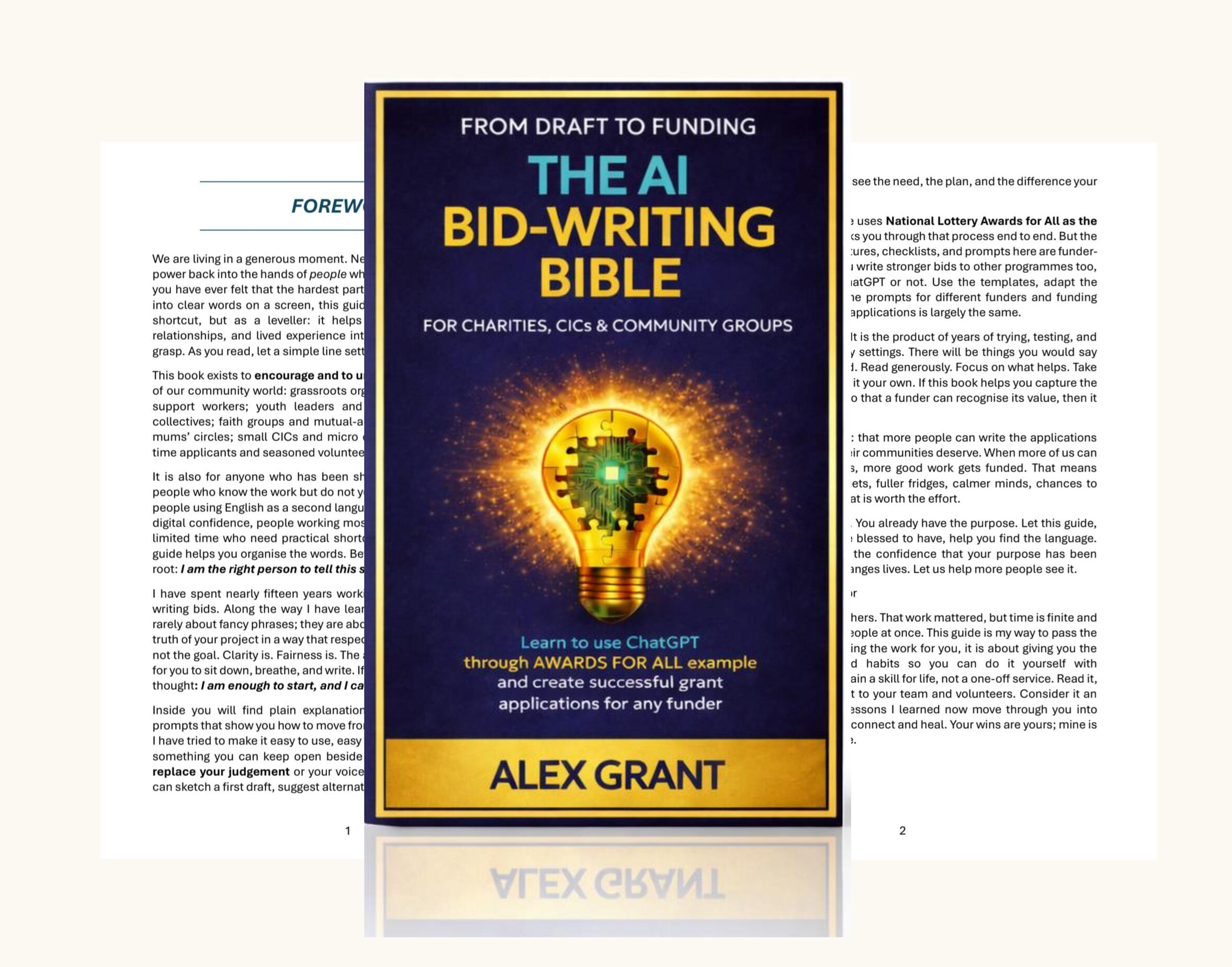
Tired of pouring your heart into applications, only to face silence or rejection? You know the need is real. You see the change every day. Yet the moment you try to explain it to a funder, it can feel like speaking a foreign language.This book changes that.
"If you've ever stared at a blank bid application with a looming deadline, this book is the lifeline you've been waiting for."
Your FREE Access to the Living Resources Behind This Book
The QR code on the last page of your copy of The AI Bid-Writing Bible takes you to the materials that sit behind it.
The full set of prompts.
A glossary written in plain English.
Updated examples as funders change their rules.
They are kept live so they do not date. Download them. Use them.
Build the kind of confidence that comes from knowing your application holds together.
Six Perspectives on Funding Applications
Trustees oversee governance, accountability and responsible use of funds.
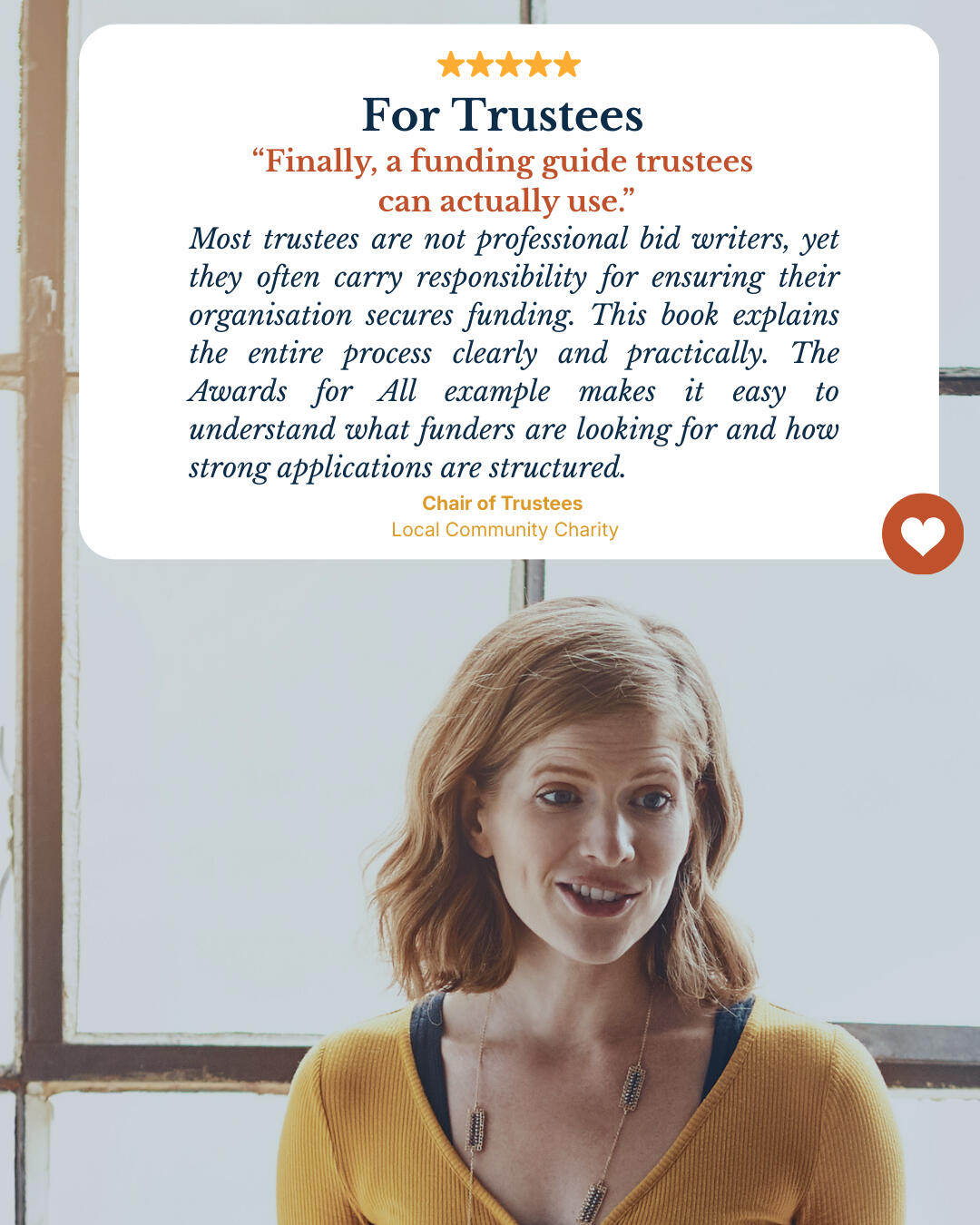
Directors shape strategy and long-term organisational sustainability.
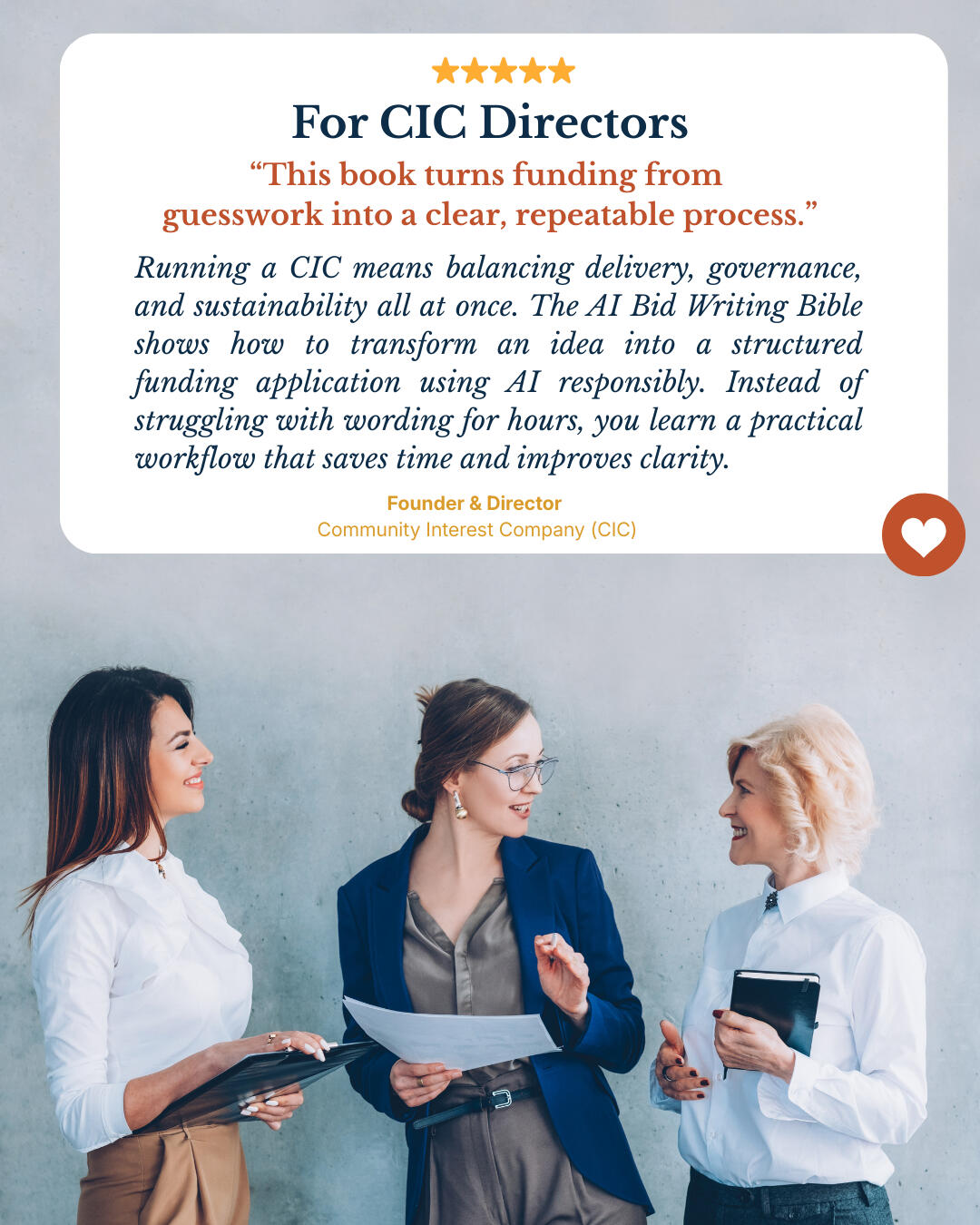
Project leaders translate community needs into programmes, activities and outcomes.
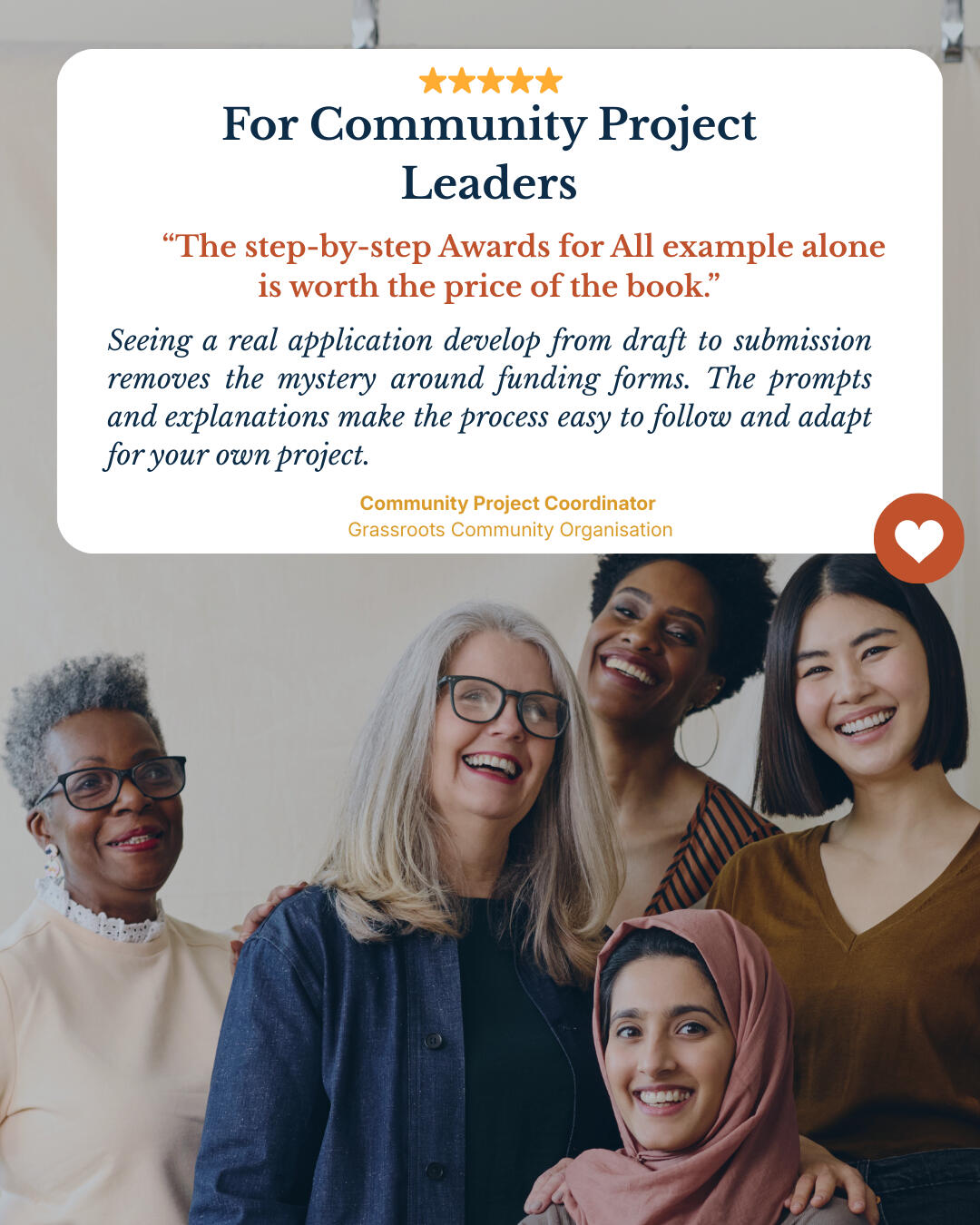
Treasurers ensure financial clarity and responsible budgeting.
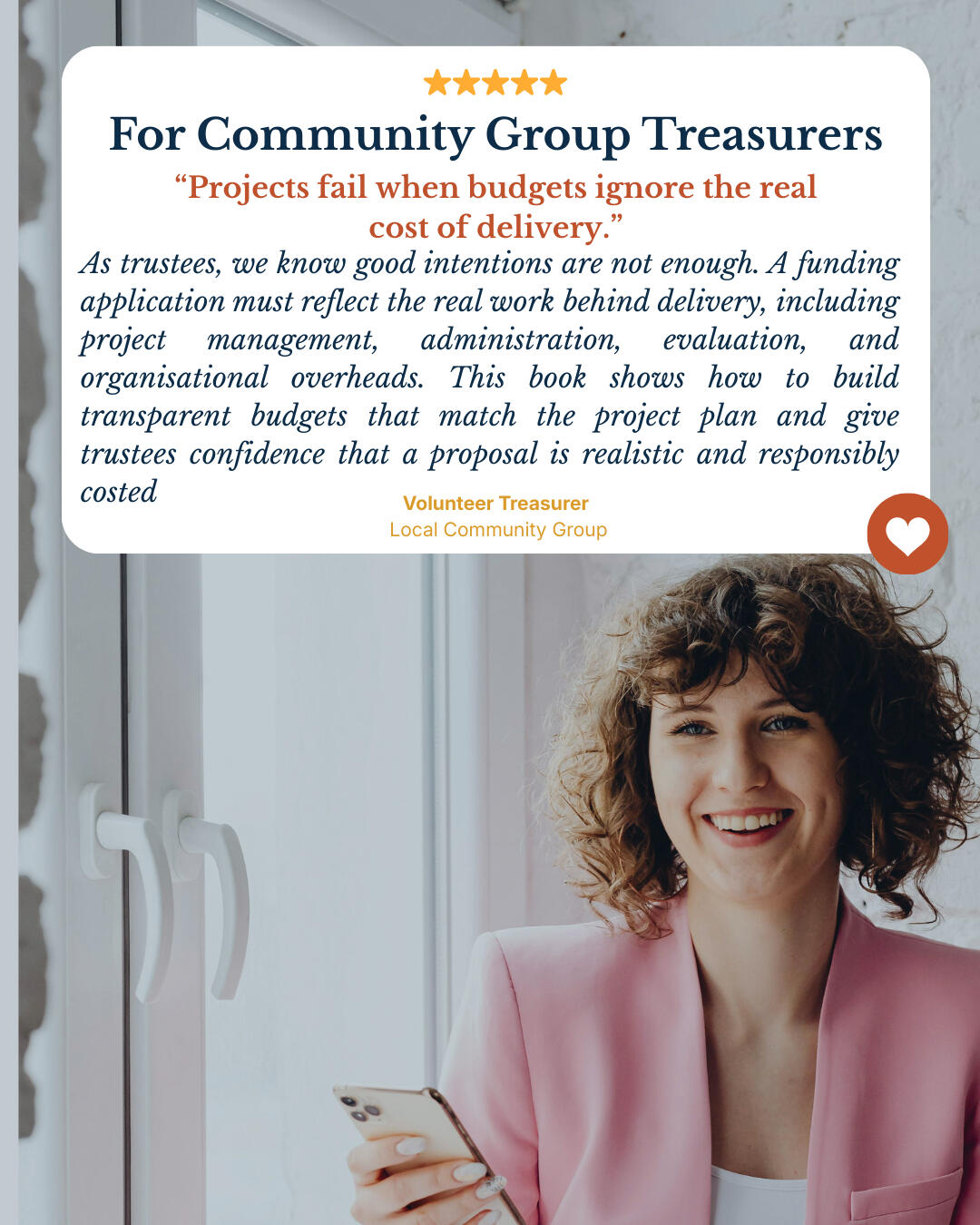
Volunteers often support the process with local knowledge and community insight.
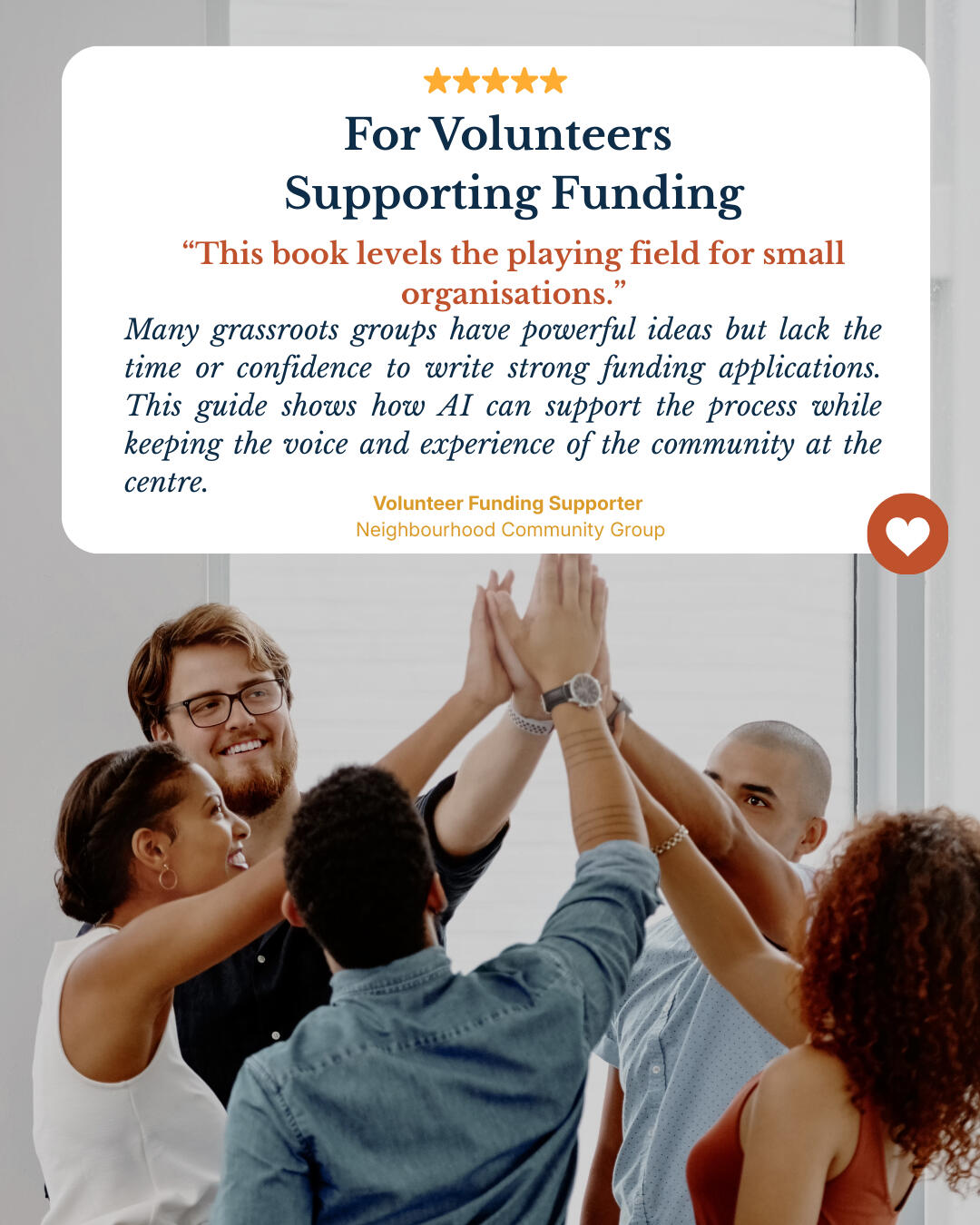
Experienced fundraisers bring technical expertise and structured approaches to applications.
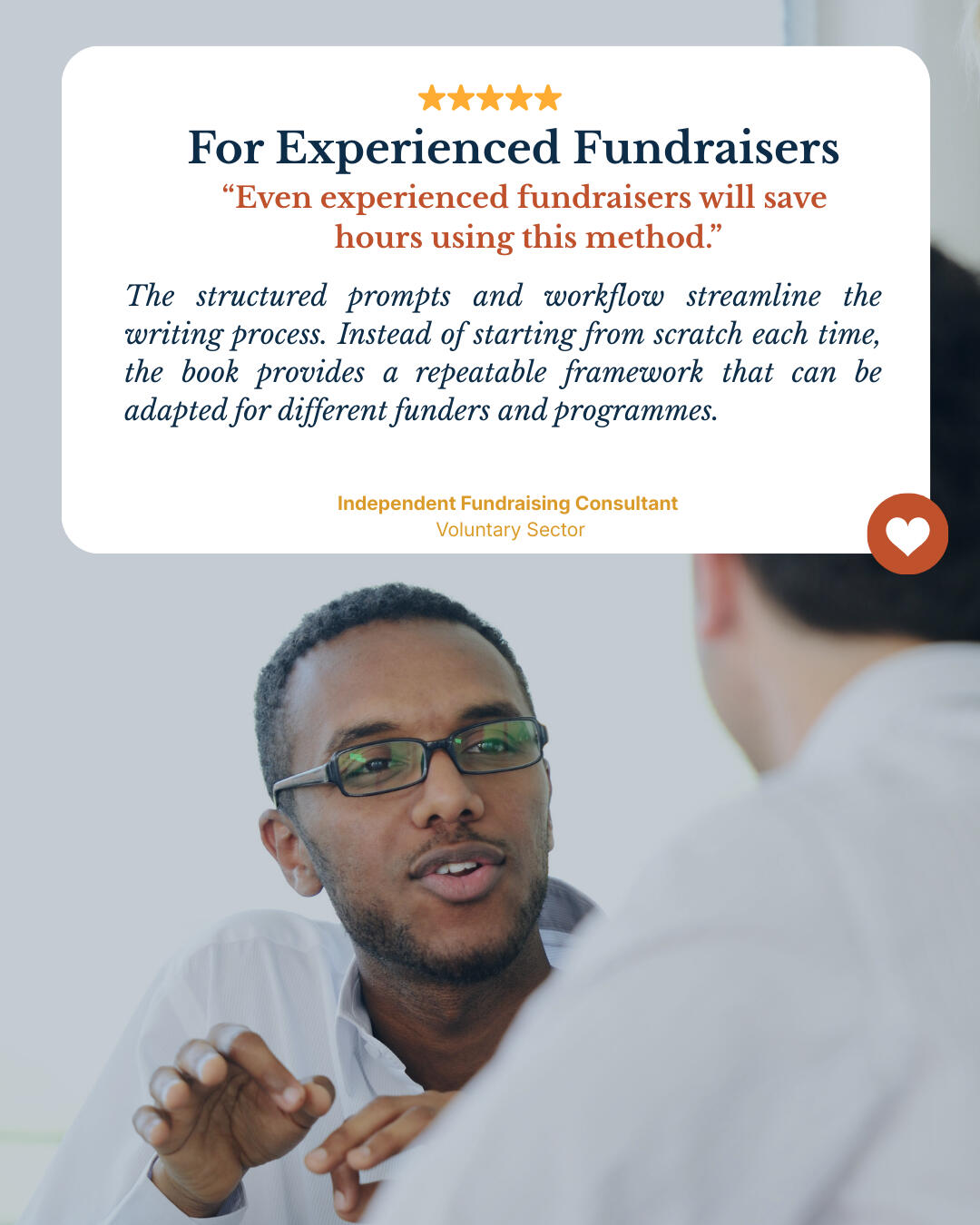
Hi, I'm Alex Grant
I work with charities, CICs and community organisations across the UK and Europe on funding strategy, project design and responsible use of AI.Over the past decade, I have been part of securing more than £1.5 million in grant funding. This has included awards from:• National Lottery programmes
• Arts Council England
• European Union funding streams
• Local authoritiesThe projects supported have ranged from grassroots community initiatives to cultural programmes, wellbeing services and community-led ventures.

The experience behind the work
I currently serve as executive director of a charitable company limited by guarantee, and as a trustee of a registered charity. That matters because it means I see funding from both sides. The board's responsibility for oversight and long-term sustainability. The delivery pressure of making things happen on the ground with the resources you have.Every piece of advice, every structure, every prompt in the book has been tested inside those realities. Governance. Delivery capacity. Financial accountability. Reporting obligations. The things that keep trustees awake at night, and the things that make project leads want to close the laptop and walk away.I have also spent nearly 15 years as Chair of a community group and a decade as trustee within registered charities. So I know what it feels like to sit through application meetings where no one is quite sure what to write, and what it feels like when the email finally arrives.This work is shaped by that experience. It comes from the ground, not from theory.
What I have learned about funding?
Most rejections are not caused by weak ideas. They are caused by applications that are unclear, misaligned or poorly structured.Funders assess applications against defined criteria. Strong submissions reflect that structure. They do not try to be clever. They answer the question, show their working, and make it easy for the assessor to say yes.Over time, I have developed a way of working that focuses on getting the foundations right before the writing starts. That means understanding the need deeply enough that you could explain it to someone outside your community. It means designing activities that flow naturally from that need, rather than activities that just sound like things funders like. It means building a budget that is not a guess but a clear reflection of what delivery actually costs. And it means using tools like AI to help with the drafting, while staying in control of the facts and the final decisions.

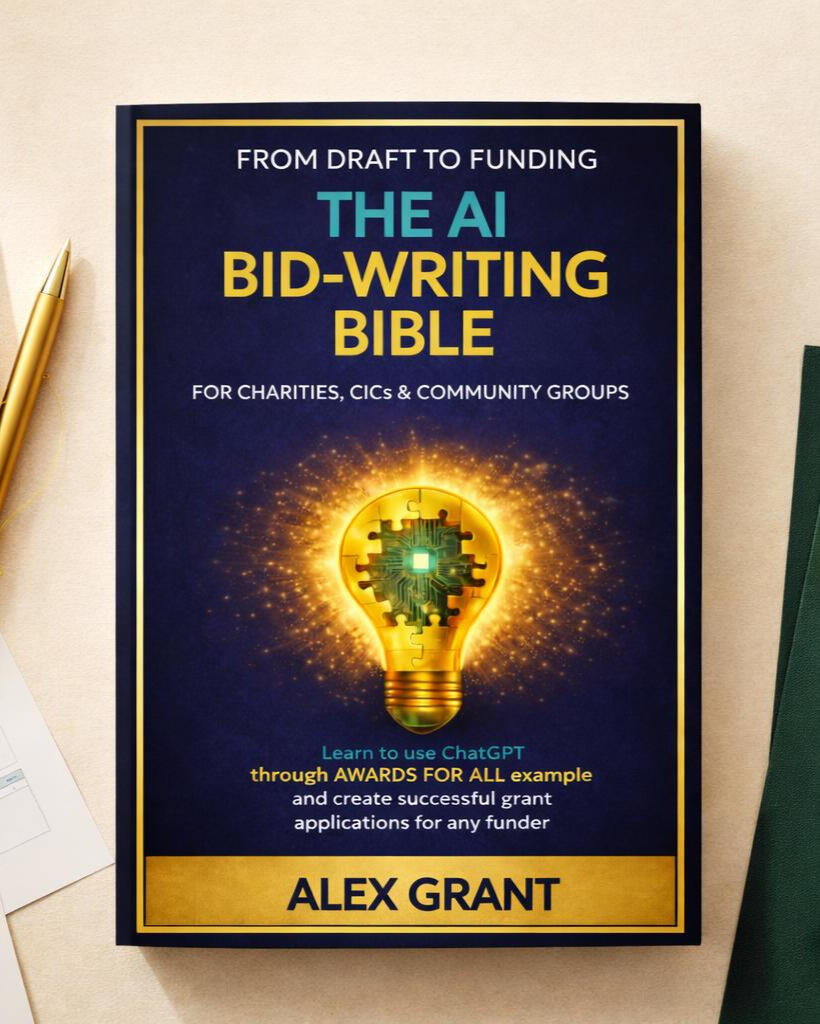
The book
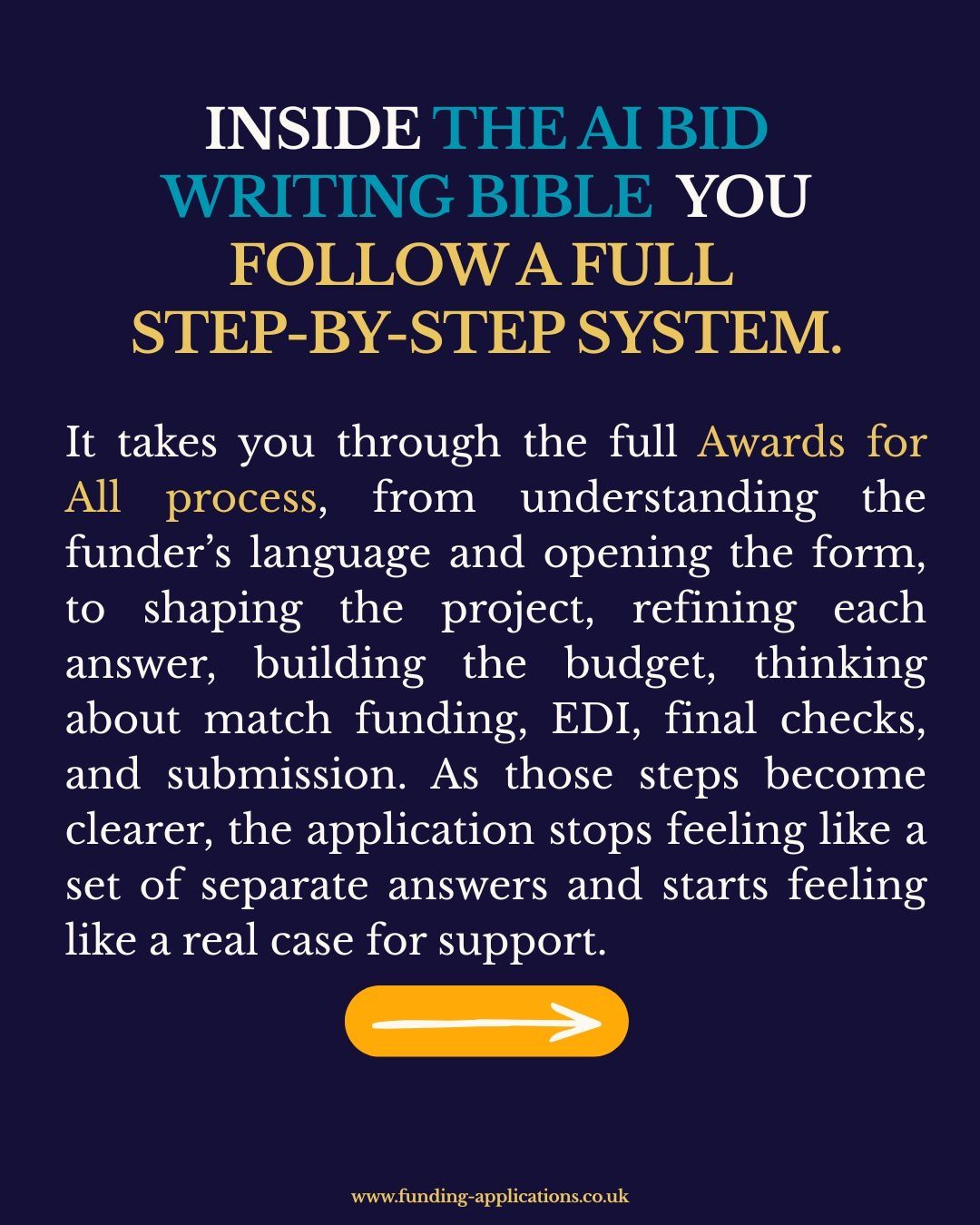
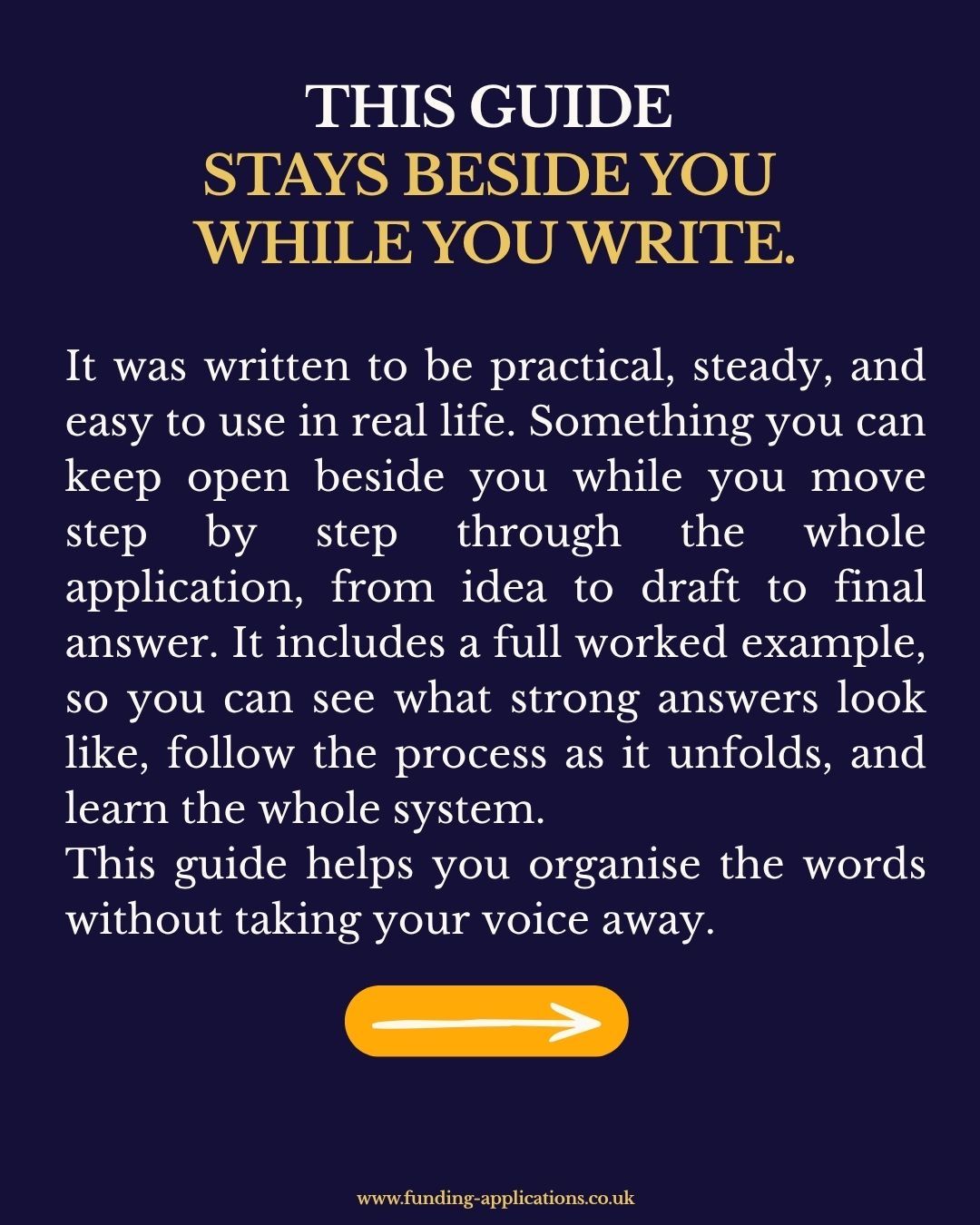
The AI Bid-Writing Bible brings this way of working into a single place. It is not a collection of templates you fill in and forget. It is a system for thinking. For designing. For writing in a way that leaves a clear trail from problem to solution to change.The chapters work through each stage methodically. Getting ready. Understanding the funder. Prompting AI so it helps rather than confuses. Building the application section by section. Creating a budget that holds together. Making final checks before you submit.The aim is not to make you dependent on a book or a tool. The aim is to give you a way of working that you can carry into any application, for any funder, for as long as you are doing this work.
Why this work exists
Community organisations are often the closest to social need and the furthest from funding clarity. The people who know what is needed most are often the ones for whom the form feels like it was written in another language. Complex criteria, shifting deadlines, administrative pressure. These things create barriers that have nothing to do with the quality of the work you do every day.This work exists to make those barriers lower. Not by promising shortcuts, but by offering clarity where there is usually confusion, and structure where there is usually noise. The goal is to help organisations like yours design projects that are fundable on their own terms, write applications that reflect the reality of your work, and eventually feel confident enough to do it without reaching for help.


What Readers Say
"If you've ever stared at a blank bid application with a looming deadline, this book is the lifeline you've been waiting for. The AI Bid Writing Bible doesn't just teach you how to write funding bids, it completely transforms the process. By taking the dreaded 'blank page' moment and showing you exactly how to harness AI, Alex has created a tool that turns hours of stressful writing into a focused, efficient workflow. The worked example using Awards for All is pure genius; it holds your hand through a real application, then gives you the confidence to adapt that learning for any funder. This isn't just a book it's the fundraising teammate every small charity and community group deserves."
"Finally, a funding guide that meets you exactly where you are. Too many resources assume you're a professional bid writer with hours to spare. The AI Bid Writing Bible understands that for most CICs and community groups, funding applications are just one of a hundred things on your to-do list. This book is brilliantly structured, walking you from 'draft to funder' with crystal-clear instructions. The standout section is the practical breakdown of the Awards for All application, it's like watching a master at work, with the AI prompts laid bare so you can see exactly how to replicate the success. Whether you're a complete beginner or a seasoned fundraiser looking to halve your writing time, this guide is an absolute game-changer. Essential reading for the voluntary sector."
"This book doesn't just help you write bids; it makes you believe you can win them. As someone who always found the language of funding applications intimidating, The AI Bid Writing Bible was a revelation. It demystifies the entire process, breaking it down into simple, manageable steps that anyone can follow. The magic is in the practical 'learn by doing' approach, using the Awards for All template as your training ground means you build genuine skill and confidence before you even approach a larger funder. A.G. has given community groups everywhere a powerful, accessible tool to level the playing field. If you've got a project that needs funding, you absolutely need this book on your desk."
Q&As
Why do we keep getting rejected when we know our work changes lives?
In reviewing applications across small charities and CICs over many years, one pattern appears consistently. Rejection rarely means the work lacks value. It means the application lacks structural coherence. Funders are not assessing goodness. They are assessing risk. When answers contradict each other, when need is asserted but not evidenced, or when activities do not clearly lead to measurable change, assessors cannot justify awarding points. In post-decision conversations, the same phrase often surfaces: “We thought this was obvious”. What feels obvious internally is not always visible on paper. Assessors read your submission as a single risk document. Once you understand how they test the connections between need, delivery, outcomes, oversight, and budget, rejection becomes diagnosable rather than mysterious.
We are a small volunteer-led group. Are we simply too small to compete?
This concern surfaces regularly in conversations with community leaders. There is an assumption that scale equals credibility. In practice, assessors focus on proportionality. A tightly scoped intervention with realistic delivery and measurable outcomes often appears lower risk than an ambitious but loosely structured proposal. Small organisations lose funding not because they are small, but because they underestimate the importance of structured design. When your plans, your evidence, and your oversight are proportionate to the request, size becomes far less relevant. Funders are not looking for the biggest organisation. They are looking for the one most likely to deliver what they promise.
Why do our applications feel repetitive or unfocused no matter how much we edit?
This usually happens when each question is treated in isolation. In reviewing drafts with teams, repetition almost always traces back to uncertainty about what each question is testing. Funders design application forms carefully. One question tests need. Another tests feasibility. Another tests monitoring. Another tests governance. When applicants respond only to wording rather than assessment purpose, duplication creeps in. When you map each answer back to the function it serves within the assessment framework, coherence replaces repetition. The same information appears in different places, but each time it answers a different underlying question.
Our budgets keep being questioned. What are we missing?
Budget challenges usually stem from narrative disconnect. In assessment panels, questions arise when costs appear detached from delivery rationale. Why this staffing level. Why this frequency. Why this resource choice. Strong applications treat budgets as narrative instruments. Every significant line reflects a conscious delivery decision. When reviewers can trace each cost back to a defined activity and outcome, confidence increases. Numbers alone rarely convince. Justified numbers do. A budget is not a separate thing from your project description. It is the same story, told in numbers. Chapter 8 of the book walks through how to build a budget that holds together and strengthens your application, with worked examples showing exactly how to calculate and justify each line.
Our trustees feel nervous signing off bids. How can we give them confidence?
Trustee hesitation is a sign of governance responsibility, not weakness. In boardrooms where funding requests are reviewed, anxiety typically centres on defensibility. Can we stand behind these claims. Are these costs proportionate. Have we realistically acknowledged risk. Trustees gain confidence when provided with a structured review framework. Does the logic hold from start to finish. Is the evidence credible. Are monitoring plans realistic. Is delivery capacity proportionate to the request. When sign-off becomes systematic rather than intuitive, boards move from nervous approval to informed endorsement. A final verification checklist, worked through together, turns anxiety into assurance.
Should we be using AI tools in our bid writing, and is it safe?
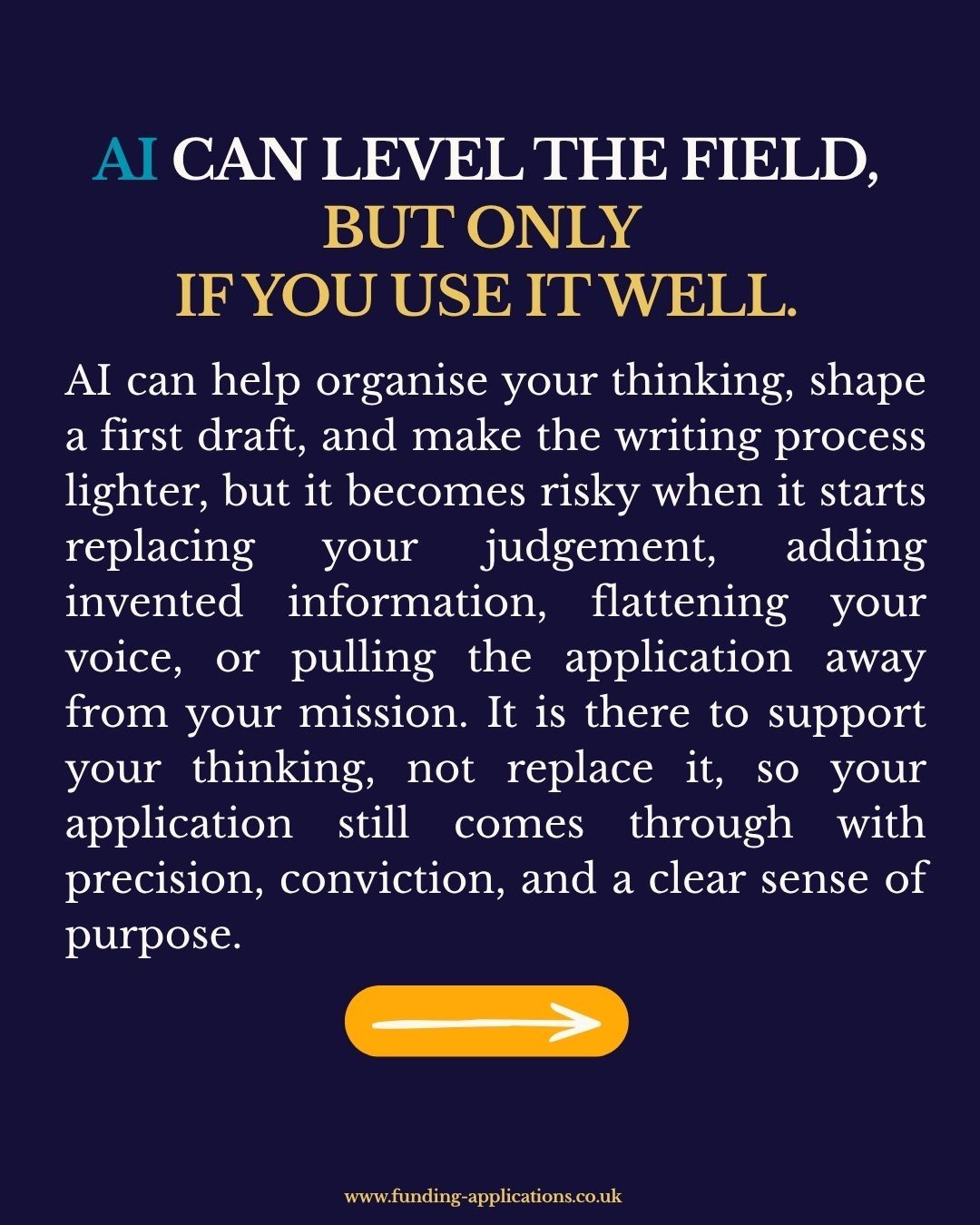
Across the sector, conversations about AI are increasing, but responsibility remains unchanged. Trustees and directors are accountable for every word submitted. The risk is not the tool itself. The risk lies in using it without disciplined oversight. Where project logic, governance checks, and evidence are already clear, AI can support drafting efficiency. Where those foundations are weak, it can amplify confusion. Organisations that approach AI as a drafting assistant rather than a strategist maintain control and compliance. The prompts in the living resources are designed to be used that way. You stay in charge. AI helps with the drafting.
How can I ask you a question, and what will you do with it?
You can use the contact form on the site. I read every message. If your question touches on something others are likely facing, it may inform future editions or new resources. This is a first edition. I have done my best, but I am open to the possibility that something needs a deeper dive than I have delivered. Your questions tell me where to go next. So, ask. If enough people ask the same thing, I will create something new to address it. Your questions keep the work practical and grounded in what you actually need.
How do we know if our project idea is actually fundable before we waste weeks writing it?
Many unsuccessful bids begin long before the form is opened. In project planning sessions, enthusiasm often replaces interrogation. A fundable idea must survive a simple test. Can you explain clearly why this activity will create this change for this group at this cost. If that pathway feels vague in conversation, it will feel risky in writing. In organisations that pause to stress test their logic before drafting, the writing stage becomes efficient and far less emotional. Funders respond to causal clarity. The work of getting ready, gathering your notes, checking your governance, understanding what the funder actually wants, is where most battles are won or lost.
How do we prove soft outcomes like confidence, belonging, or wellbeing without formal research data?
In funding reviews, assessors rarely expect academic trials from grassroots organisations. What they look for is credible observation. Increased confidence must be defined in behavioural terms. What changes in practice. Who acts differently. What becomes possible that was not possible before. In projects where these indicators are agreed at the start, evidence collection becomes natural rather than burdensome. Attendance patterns, participant progression, peer support behaviours, facilitator observations. When soft outcomes are translated into observable shifts, they become defensible rather than aspirational. The language of impact is not about big words. It is about noticing what changes and describing it plainly. Chapter 4 of the book works through this in detail, showing how to turn everyday observation into evidence funders can trust.
How do we design activities that assessors immediately trust?
Trust is built through intervention logic. In funded programmes that progress smoothly through assessment, the pathway from problem to change is explicit and realistic. Activities are not chosen because they sound appealing. They are chosen because they directly address the defined need. Assessors look for a believable chain of cause and effect. When the link between need, delivery, and outcome is transparent and proportionate, confidence increases. Funders do not fund ambition alone. They fund clarity and feasibility. A simple description of what you will do, who it is for, and why it matters, all connected, is more powerful than any amount of persuasive language.
We do not have sophisticated data systems. Are we already disadvantaged?
Most community organisations hold more usable evidence than they realise. Attendance logs. Waiting lists. Partner referrals. Case notes. Participant feedback. Informal progression records. The challenge is rarely absence of data. It is connection. When everyday records are intentionally linked to stated outcomes, they become a structured evidence base. Organisations that organise what they already collect often discover they are far stronger than they assumed. You do not need a complex database. You need to know what you are already holding and how it speaks to the difference you make.
We are told our applications lack detail. When we add detail, they become too long. Where is the balance?
Detail must strengthen credibility, not inflate description. In unsuccessful bids, added detail often appears in expanded activity descriptions. Assessors rarely need more adjectives about sessions. They need clarity about connections. Relevant detail explains how need was identified, how participants are selected, how outcomes are measured, and how risks are mitigated. Applications that earn higher scores tend to be precise in reasoning and concise in narrative. Precision earns points. Volume does not. The question is not how much you have written, but whether what you have written answers what they are asking.
How is The AI Bid-Writing Bible different from the many templates and guides already available online?
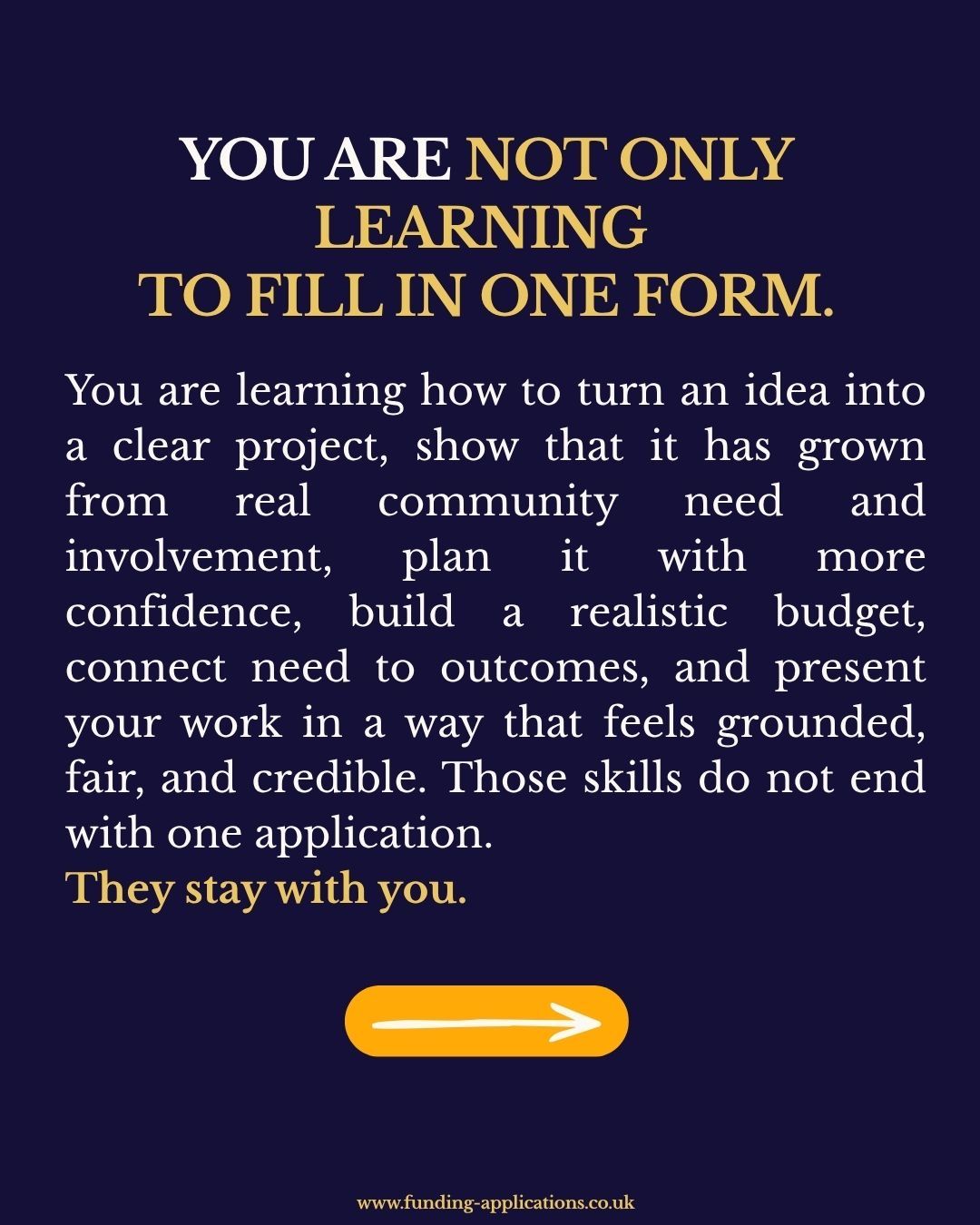
Many guides offer examples and suggested phrases. In practice, copying structure without understanding underlying logic often leads to fragile applications. The difference lies in decision-making discipline. This book does not give you one template to fill in. It gives you a way of thinking that works across any funder, any programme, any size of grant. It walks through a complete Awards for All example from end to end, showing not just what to write, but how to arrive at the answer yourself using AI as a partner. The aim is not simply to complete one form. It is to internalise a way of thinking that strengthens every future application.
What living resources are available, and how do I access them?
I did not include printed appendices because they date quickly. Instead, the QR code at the back of the book takes you to materials that stay current.You will find: The complete set of ChatGPT prompts, ready to copy and paste; A plain-English glossary of funding terms; updated examples as funders change their requirements; A short practical note on ethical AI use in funding applications.These are yours to download, use, and share inside your organisation. They are kept live so they do not date the way a printed appendix would.
Where can I order the book and leave a review?
The book is available through the order link BELOW. If it made your application clearer, stronger, or easier to write, a quick honest review on Amazon UK helps other charities, CICs, and community groups decide whether it is worth their time. Even one or two sentences makes a difference. It also helps me improve future editions, so the work stays useful.
Please register for updates
Enter your details below if you would like to receive information about updates and occasional guidance related to funding applications.
Website for The AI Bid-Writing Bible © 2026 Alex Grant
All rights reserved. Independently published.
Welcome!
THANK YOU for buying
The AI Bid Writing Bible.
You now have access to the companion resources for the book. These resources are designed to support the ideas in the book and will continue to evolve as the funding landscape changes.
Please register for updates
Enter your details below if you would like to receive new reader resources and occasional guidance related to funding applications.
What you will find here
Inside this reader hub, you will find practical tools to help you apply the ideas from the book in real funding work.Start by DOWNLOADING these core resources:
1. The Ultimate AI Bid-Writing GlossaryThis glossary includes more than 150 terms explained in plain English, with funder logic, example sentences, and clear AI drafting notes that show you when AI can help and when you need to check more carefully.You will not find jargon for the sake of it. You will not need to guess what funders mean. You will have the language that helps you write applications funders can follow, assess, and trust.
2. Awards for All Living Application CompanionUpdated for April 2026Awards for All changes quietly and regularly. Priorities shift. Guidance is revised. The rules also differ across England, Scotland, Wales, and Northern Ireland.This companion helps you spot the differences that matter and apply what The AI Bid Writing Bible teaches in a practical way.Inside, you will find:
the four key funding priorities, with clear explanation of why an approach that works in England may weaken an application in Scotland
the three application questions broken down with location-aware notes
the bank statement requirements shown exactly as the funder checks them, including what may be rejected, such as abbreviated names, joint personal accounts, or missing logos
the funder’s own position on using AI tools, including what they allow, what they warn against, and where generic AI content can weaken an application
This is not a broad summary. It is a living document created for readers of this book, so you are less likely to be caught out by a recent rule change or a priority that varies by location.
3. Your Library of Genius Prompts for Any Funding ApplicationThis library gives you thirty prompts organised into ten phases, from early foundation thinking through to final strategic checks.Each prompt is designed to help you ask better questions so the AI can give you stronger answers. It is there to help you move past the blank page and avoid vague, generic drafting.You can use these prompts for Awards for All, The National Lottery Community Fund, Comic Relief, BBC Children in Need, and many other funders. They work because they draw out your thinking instead of leaving the AI to fill in the gaps.
Has this book helped you?
If the book has helped you think more clearly about funding or structure your applications more effectively, I would be grateful for a short, honest review on Amazon.Many readers discover the book through reviews from people working in real organisations. Even a sentence or two can help other charities and community groups decide whether this book will be useful to them.
Policies
Website: funding-applications.co.uk
Author brand: Alex Grant
Contact email: [email protected]
Last updated: March 2026
Privacy Policy
Introduction
This Privacy Policy explains how personal data is collected, used, and protected when you visit this website. We are committed to handling personal data responsibly and in accordance with applicable UK data protection law.Website Operator and Data Controller
This website is operated by a sole trader based in the United Kingdom, trading under the name Alex Grant. Content and publications available on this website are produced under the name Alex Grant. The website operator is the data controller responsible for your personal data. Under UK GDPR, the controller is the party responsible for deciding why and how personal data is processed.Contact Details
Data Controller: Website operator trading as Alex Grant
Email: [email protected]
Correspondence address: PO Box address available upon formal written requestWhat Data We May Collect
Depending on how you use the website, we may collect and process:
• Identity and contact data, such as your name and email address, if you contact us or subscribe to updates
• Marketing data, such as your email preferences and subscription choices
• Technical and usage data, such as browser type, device information, pages viewed, and general website interaction data collected through analytics toolsAn email address and related subscriber details are personal data where they relate to an identifiable individual.How We Use Personal Data and Our Lawful Basis
We may process personal data in order to respond to enquiries submitted through the website. This may include identity and contact data. The lawful basis for this processing is our legitimate interest in responding to user queries and communicating with visitors.We may process identity, contact, and marketing data to send occasional updates, resources, and publications you have requested. The lawful basis for this processing is your consent.If you subscribe to email updates, your subscriber information may be collected and managed using Brevo, an email marketing platform used to administer mailing lists and send email communications. In this arrangement, the website operator remains the data controller, and Brevo acts as a data processor on the operator’s behalf. Subscriber data is used only for managing subscriptions and sending requested communications. You may unsubscribe at any time using the unsubscribe link included in emails or by contacting us directly. Brevo states that it supports its customers’ GDPR compliance in this processor role and provides a DPA and related security documentation.Technical and usage data may be processed to administer and protect the website, including troubleshooting, system maintenance, and security monitoring. The lawful basis for this processing is our legitimate interest in operating and protecting the website.Technical and usage data may also be processed for analytics purposes in order to improve website performance, content, and user experience. The lawful basis for this processing is our legitimate interest in developing and improving the website. ICO guidance expects privacy information to explain the purposes of processing and the legal bases relied on.Who We Share Data With
We do not sell your personal data.We may share personal data with trusted service providers where necessary to operate the website and provide services you have requested. This may include website hosting providers, analytics providers, and Brevo for email subscription management and email communications. Where third-party providers process data on our behalf, they do so in accordance with their contractual and legal obligations.Data Retention
Contact form enquiries are retained for up to 12 months after the last communication.Email subscriber information is retained until a user unsubscribes. Subscriber lists may be reviewed annually, and inactive subscribers may be removed after 24 months of inactivity.Analytics data may be retained for up to 26 months in line with common analytics retention settings.Your Rights
Subject to applicable law, you may have the right to request access to the personal data we hold about you, to request correction of inaccurate data, to request erasure of your data, to object to certain processing, and to request restriction of processing in some circumstances.Where processing is based on consent, you may withdraw that consent at any time. This will not affect the lawfulness of processing carried out before consent was withdrawn.You also have the right to lodge a complaint with the Information Commissioner’s Office (ICO) if you believe your data has been handled unlawfully or unfairly. ICO guidance says individuals are entitled to supplementary privacy information and have the right to access their personal data.Contact About Privacy
If you have any questions about this Privacy Policy or how your personal data is handled, please contact:Email: [email protected]
Correspondence address: PO Box address available upon formal written request
Cookie Policy
This Cookie Policy explains how the website operator, trading as Alex Grant, uses cookies and similar technologies when you visit funding-applications.co.uk.What Are Cookies?
Cookies are small text files placed on your device when you visit a website. They help websites function properly, remember preferences, and collect information about how visitors use the site.Types of Cookies Used
Strictly necessary cookies are essential for the website to function properly. These cookies are typically set in response to actions made by you, such as setting privacy preferences, navigating pages, or submitting forms. Examples may include cookie consent preferences and session cookies.Analytics cookies help us understand how visitors interact with the website so that we can measure traffic and improve performance. These cookies may collect information about pages visited, time spent on the website, and general usage patterns.Managing Cookies
Where required, you will be given the option to accept or reject non-essential cookies. You can also control cookies through your browser settings. Disabling some cookies may affect how the website functions.
Terms of Use
Purpose of the Website
This website provides educational information about funding applications, including guides, resources, and information on using AI as a writing support tool.Acceptable Use
You agree to use this website only for lawful purposes and in a way that does not infringe the rights of, restrict, or inhibit the use of this website by any other person.Intellectual Property
All content on this website, including text, graphics, logos, and downloadable resources, is the property of the website operator trading as Alex Grant and is protected by United Kingdom and international copyright laws. All rights reserved.You may not reproduce, distribute, modify, republish, or commercially exploit any material from this website without prior written permission, except where limited use is permitted by law.External Links
This website may include links to external websites for information or convenience. We are not responsible for the content, policies, or practices of third-party websites.
Disclaimer
The information provided on this website and in related publications is for educational purposes only. It does not constitute legal, financial, business, or other professional advice.While reasonable efforts are made to keep content accurate and up to date, no representation or warranty is given that the information on this website is complete, accurate, or current.Any reliance you place on information provided through this website is strictly at your own discretion. You should seek appropriate professional advice before making decisions based on any content published on this website.
Accessibility Statement
The website operator, trading as Alex Grant, is committed to making this website accessible to as many users as possible. The website aims to follow WCAG 2.1 Level AA accessibility principles where reasonably possible.We are continually working to improve accessibility and usability across the site. If you experience any difficulty accessing content on this website, or if you would like to report an accessibility issue, please contact:Email: [email protected]We will make reasonable efforts to review the issue and provide assistance where possible.
Contact
Website operator: Trading as Alex Grant
Email: [email protected]
Correspondence address: PO Box address available upon formal written request
Policies
Website: funding-applications.co.uk
Author brand: Alex Grant
Contact email: [email protected]
Last updated: March 2026
Privacy Policy
Introduction
This Privacy Policy explains how personal data is collected, used, and protected when you visit this website. We are committed to handling personal data responsibly and in accordance with applicable UK data protection law.Website Operator and Data Controller
This website is operated by a sole trader based in the United Kingdom, trading under the name Alex Grant. Content and publications available on this website are produced under the name Alex Grant. The website operator is the data controller responsible for your personal data. Under UK GDPR, the controller is the party responsible for deciding why and how personal data is processed.Contact Details
Data Controller: Website operator trading as Alex Grant
Email: [email protected]
Correspondence address: PO Box address available upon formal written requestWhat Data We May Collect
Depending on how you use the website, we may collect and process:
• Identity and contact data, such as your name and email address, if you contact us or subscribe to updates
• Marketing data, such as your email preferences and subscription choices
• Technical and usage data, such as browser type, device information, pages viewed, and general website interaction data collected through analytics toolsAn email address and related subscriber details are personal data where they relate to an identifiable individual.How We Use Personal Data and Our Lawful Basis
We may process personal data in order to respond to enquiries submitted through the website. This may include identity and contact data. The lawful basis for this processing is our legitimate interest in responding to user queries and communicating with visitors.We may process identity, contact, and marketing data to send occasional updates, resources, and publications you have requested. The lawful basis for this processing is your consent.If you subscribe to email updates, your subscriber information may be collected and managed using Brevo, an email marketing platform used to administer mailing lists and send email communications. In this arrangement, the website operator remains the data controller, and Brevo acts as a data processor on the operator’s behalf. Subscriber data is used only for managing subscriptions and sending requested communications. You may unsubscribe at any time using the unsubscribe link included in emails or by contacting us directly. Brevo states that it supports its customers’ GDPR compliance in this processor role and provides a DPA and related security documentation.Technical and usage data may be processed to administer and protect the website, including troubleshooting, system maintenance, and security monitoring. The lawful basis for this processing is our legitimate interest in operating and protecting the website.Technical and usage data may also be processed for analytics purposes in order to improve website performance, content, and user experience. The lawful basis for this processing is our legitimate interest in developing and improving the website. ICO guidance expects privacy information to explain the purposes of processing and the legal bases relied on.Who We Share Data With
We do not sell your personal data.We may share personal data with trusted service providers where necessary to operate the website and provide services you have requested. This may include website hosting providers, analytics providers, and Brevo for email subscription management and email communications. Where third-party providers process data on our behalf, they do so in accordance with their contractual and legal obligations.Data Retention
Contact form enquiries are retained for up to 12 months after the last communication.Email subscriber information is retained until a user unsubscribes. Subscriber lists may be reviewed annually, and inactive subscribers may be removed after 24 months of inactivity.Analytics data may be retained for up to 26 months in line with common analytics retention settings.Your Rights
Subject to applicable law, you may have the right to request access to the personal data we hold about you, to request correction of inaccurate data, to request erasure of your data, to object to certain processing, and to request restriction of processing in some circumstances.Where processing is based on consent, you may withdraw that consent at any time. This will not affect the lawfulness of processing carried out before consent was withdrawn.You also have the right to lodge a complaint with the Information Commissioner’s Office (ICO) if you believe your data has been handled unlawfully or unfairly. ICO guidance says individuals are entitled to supplementary privacy information and have the right to access their personal data.Contact About Privacy
If you have any questions about this Privacy Policy or how your personal data is handled, please contact:Email: [email protected]
Correspondence address: PO Box address available upon formal written request
Cookie Policy
This Cookie Policy explains how the website operator, trading as Alex Grant, uses cookies and similar technologies when you visit funding-applications.co.uk.What Are Cookies?
Cookies are small text files placed on your device when you visit a website. They help websites function properly, remember preferences, and collect information about how visitors use the site.Types of Cookies Used
Strictly necessary cookies are essential for the website to function properly. These cookies are typically set in response to actions made by you, such as setting privacy preferences, navigating pages, or submitting forms. Examples may include cookie consent preferences and session cookies.Analytics cookies help us understand how visitors interact with the website so that we can measure traffic and improve performance. These cookies may collect information about pages visited, time spent on the website, and general usage patterns.Managing Cookies
Where required, you will be given the option to accept or reject non-essential cookies. You can also control cookies through your browser settings. Disabling some cookies may affect how the website functions.
Terms of Use
Purpose of the Website
This website provides educational information about funding applications, including guides, resources, and information on using AI as a writing support tool.Acceptable Use
You agree to use this website only for lawful purposes and in a way that does not infringe the rights of, restrict, or inhibit the use of this website by any other person.Intellectual Property
All content on this website, including text, graphics, logos, and downloadable resources, is the property of the website operator trading as Alex Grant and is protected by United Kingdom and international copyright laws. All rights reserved.You may not reproduce, distribute, modify, republish, or commercially exploit any material from this website without prior written permission, except where limited use is permitted by law.External Links
This website may include links to external websites for information or convenience. We are not responsible for the content, policies, or practices of third-party websites.
Disclaimer
The information provided on this website and in related publications is for educational purposes only. It does not constitute legal, financial, business, or other professional advice.While reasonable efforts are made to keep content accurate and up to date, no representation or warranty is given that the information on this website is complete, accurate, or current.Any reliance you place on information provided through this website is strictly at your own discretion. You should seek appropriate professional advice before making decisions based on any content published on this website.
Accessibility Statement
The website operator, trading as Alex Grant, is committed to making this website accessible to as many users as possible. The website aims to follow WCAG 2.1 Level AA accessibility principles where reasonably possible.We are continually working to improve accessibility and usability across the site. If you experience any difficulty accessing content on this website, or if you would like to report an accessibility issue, please contact:Email: [email protected]We will make reasonable efforts to review the issue and provide assistance where possible.
Contact
Website operator: Trading as Alex Grant
Email: [email protected]
Correspondence address: PO Box address available upon formal written request